Published
Author
Nathan Litchfield
AWE LA 2025
At a show built around headsets, glasses and platforms, the question we heard most often at our stand had nothing to do with hardware. It was different versions of: "That's impressive, but what would we actually do with it?"
Our Experience Exhibiting
AWE 2025 in Los Angeles is one of the biggest gatherings in the XR calendar, and it is dominated by the people building the tools: the device makers, the platform companies, the software providers. We were there for a different reason. We are a creative XR studio, and our work is not about the kit itself. It is about what XR makes possible in communications, visualisation and training.
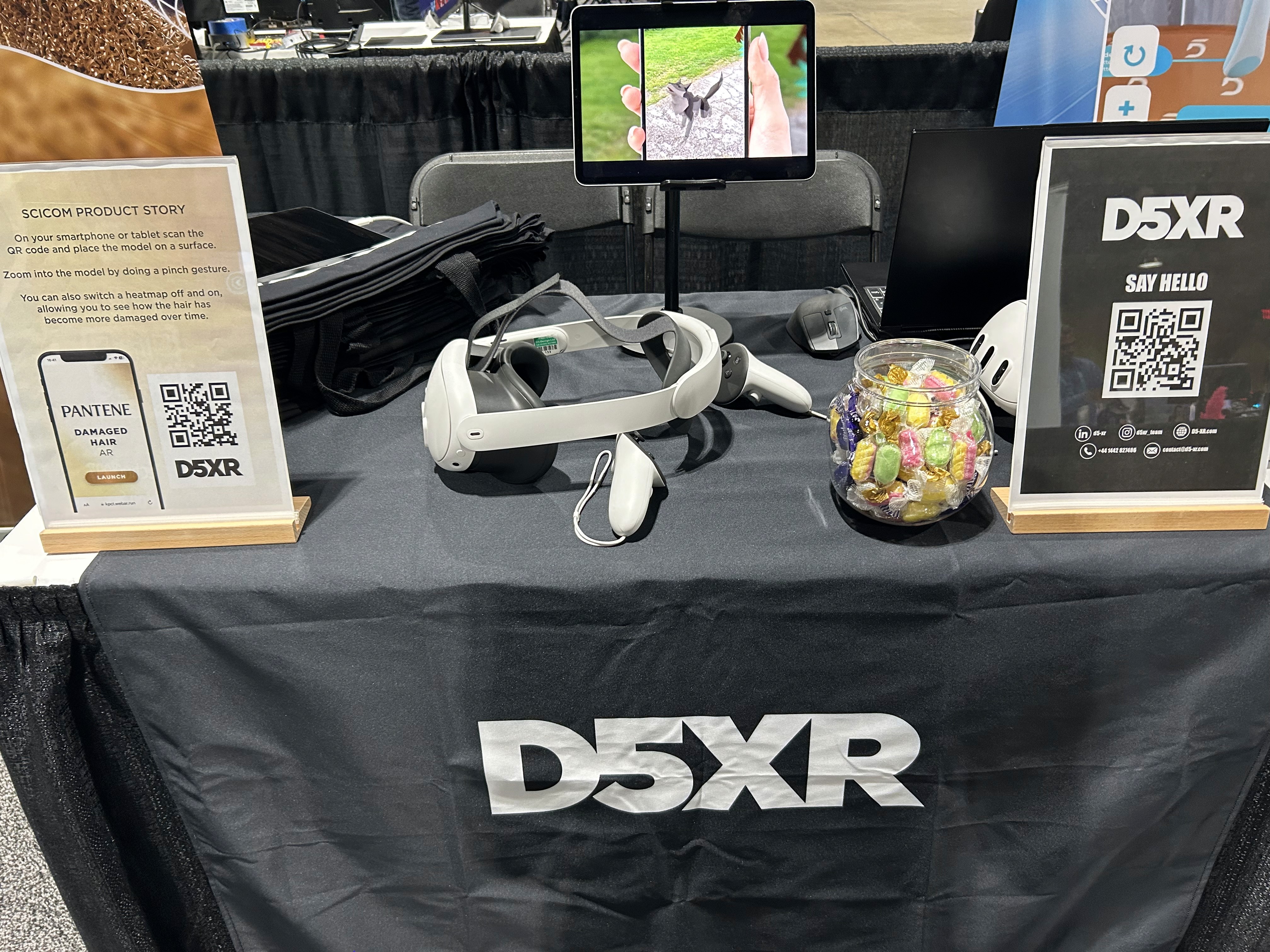
So, we set up with a clear intention. Rather than show another piece of technology, we wanted to show outcomes. We brought VR, MR and AR demos to the floor and spent three days in conversation with a broad mix of people, from enterprise buyers to fellow creators, exploring ideas and business opportunities.
Capability Without Direction
The hardware on display at AWE was, as always, remarkable. But a clear pattern emerged in our conversations. Plenty of visitors were excited by the technology but unsure what to do with it. They could see the capability. They could not always see the application.
That gap is exactly where we come in. Our job is to collaborate and educate with teams, understand what they are actually trying to achieve, and then work out which technology serves that objective best. Sometimes that is VR, sometimes AR, sometimes a blend of different technologies. Often the most honest answer is that a particular tool is not the right fit at all.
The Right Tech for the Job
Too often XR gets chosen because it is exciting or because the budget is there for something impressive. We think that is backwards. The technology should be selected to do a job, not the job invented to justify the technology. Marrying the right capability to the right objective is the difference between a demo that wows for a minute and a deployment that delivers a real result.
If a conversation at the show got you thinking, or if you are reading this and recognising the same gap between capability and application in your own organisation, we would love to talk it through.
AWE LA 2025
At a show built around headsets, glasses and platforms, the question we heard most often at our stand had nothing to do with hardware. It was different versions of: "That's impressive, but what would we actually do with it?"
Our Experience Exhibiting
AWE 2025 in Los Angeles is one of the biggest gatherings in the XR calendar, and it is dominated by the people building the tools: the device makers, the platform companies, the software providers. We were there for a different reason. We are a creative XR studio, and our work is not about the kit itself. It is about what XR makes possible in communications, visualisation and training.
So, we set up with a clear intention. Rather than show another piece of technology, we wanted to show outcomes. We brought VR, MR and AR demos to the floor and spent three days in conversation with a broad mix of people, from enterprise buyers to fellow creators, exploring ideas and business opportunities.
Capability Without Direction
The hardware on display at AWE was, as always, remarkable. But a clear pattern emerged in our conversations. Plenty of visitors were excited by the technology but unsure what to do with it. They could see the capability. They could not always see the application.
That gap is exactly where we come in. Our job is to collaborate and educate with teams, understand what they are actually trying to achieve, and then work out which technology serves that objective best. Sometimes that is VR, sometimes AR, sometimes a blend of different technologies. Often the most honest answer is that a particular tool is not the right fit at all.
The Right Tech for the Job
Too often XR gets chosen because it is exciting or because the budget is there for something impressive. We think that is backwards. The technology should be selected to do a job, not the job invented to justify the technology. Marrying the right capability to the right objective is the difference between a demo that wows for a minute and a deployment that delivers a real result.
If a conversation at the show got you thinking, or if you are reading this and recognising the same gap between capability and application in your own organisation, we would love to talk it through.