Published
Author
Nathan Litchfield
AWE LA 2024
The D5XR team travelled to Los Angeles for AWE 2024 to explore the latest developments in XR technology. The event provided an opportunity to assess emerging tools for future projects and client conversations, hear from industry leaders, and strengthen connections across the wider XR community. One of the clearest themes across the event was the continued momentum behind XR glasses.
3 Talks We loved
XREAL
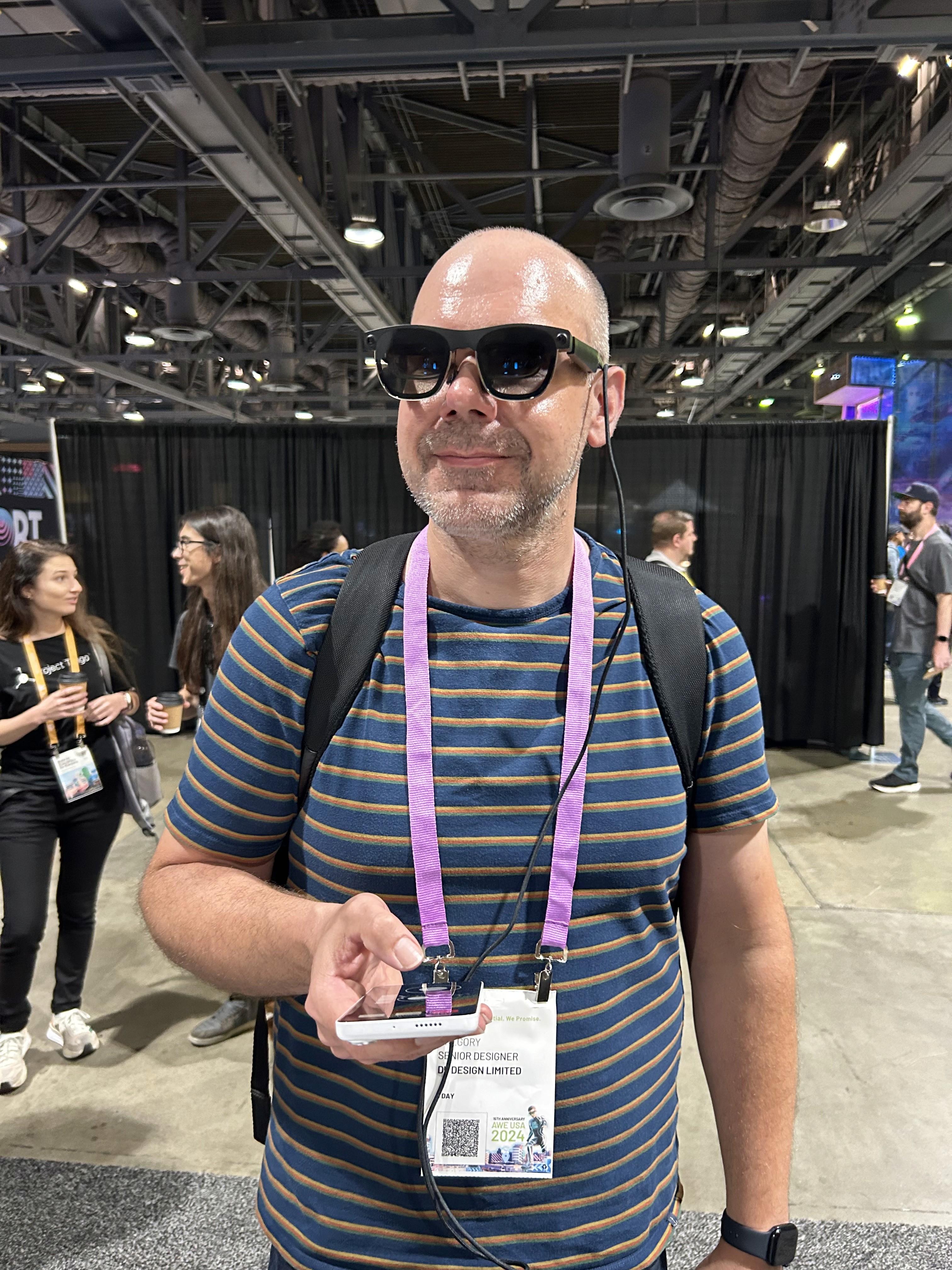
A demonstration from the XREAL team offered a strong view of how AR glasses are becoming more practical for everyday work and entertainment use. The visual quality was sharp and clear, while the form factor felt noticeably more natural for extended wear than a traditional headset. Although the glasses rely on a cable connection to the Beam Pro processing device, this did not feel disruptive in practice. The addition of Beam Pro, which brings access to Android and the Google Play Store in a spatial environment, significantly broadens the platform’s potential for both productivity and content access.
Magic Leap
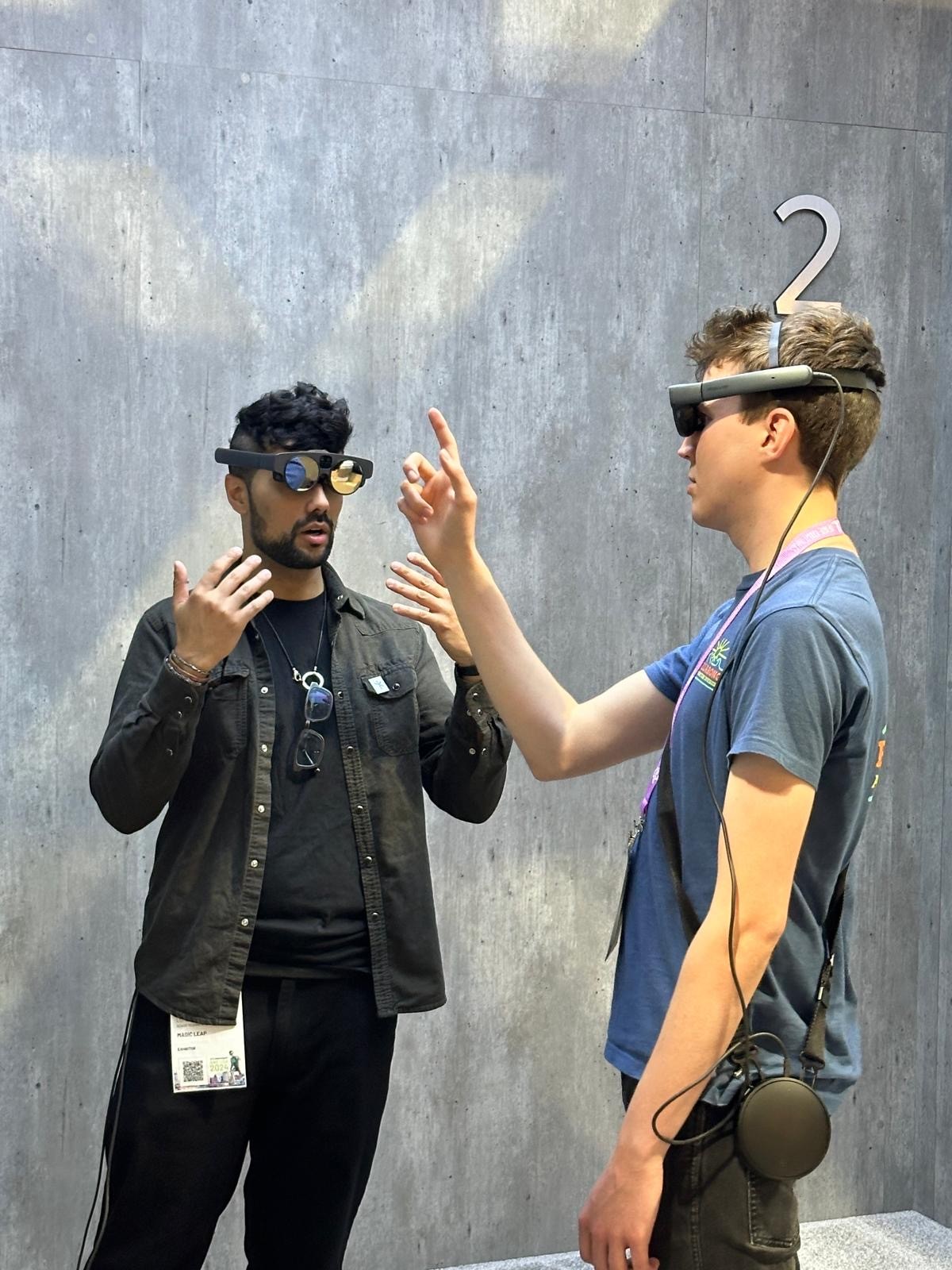
The Magic Leap 2 demonstration stood out for its interactive capabilities, with digital objects responding smoothly and hand tracking performing reliably throughout. While the visuals still retained some of the distinct digital qualities typical of optical see-through AR, the lightweight glasses were comfortable to wear and the overall interaction felt polished. Combined with its compact processing unit, the experience suggested clear potential for dependable use in education and training scenarios where comfort and consistency are critical.
HaptX
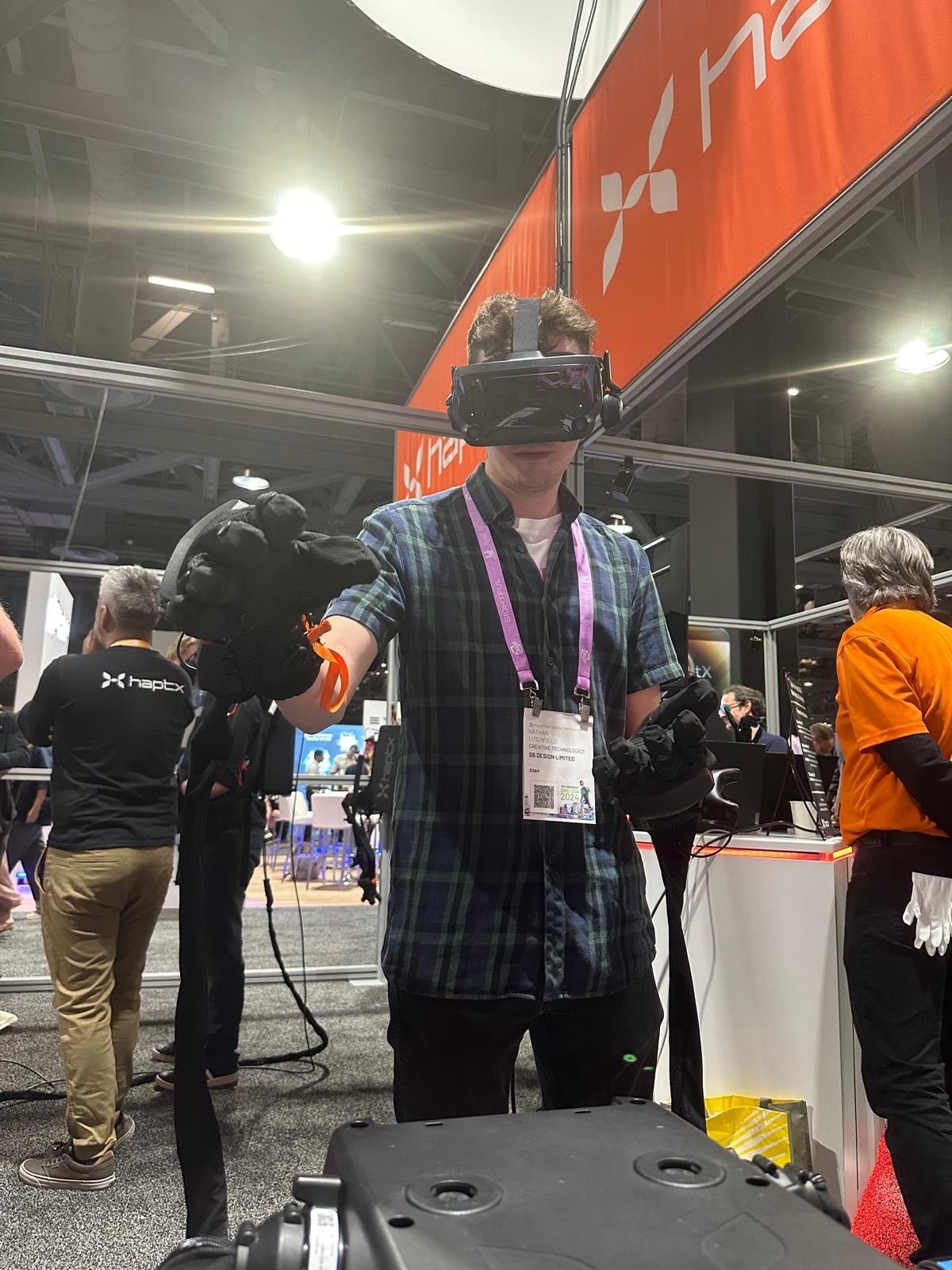
HaptX delivered one of the most memorable demonstrations of the event. After a well-attended session, I was able to try the G1 gloves in a pirate-themed VR experience built around object handling and environmental interaction. The standout moment came when interacting with a sea urchin, where the tactile feedback created a remarkably convincing sense of texture as it rolled across the palm. That level of realism pushed the experience far beyond visual immersion alone. The gloves use hundreds of microfluidic tactile actuators, alongside force feedback, to simulate texture, resistance, weight, and shape with impressive precision, highlighting strong potential for training and advanced simulation use cases.
AWE LA 2024
The D5XR team travelled to Los Angeles for AWE 2024 to explore the latest developments in XR technology. The event provided an opportunity to assess emerging tools for future projects and client conversations, hear from industry leaders, and strengthen connections across the wider XR community. One of the clearest themes across the event was the continued momentum behind XR glasses.
3 Talks We loved
XREAL
A demonstration from the XREAL team offered a strong view of how AR glasses are becoming more practical for everyday work and entertainment use. The visual quality was sharp and clear, while the form factor felt noticeably more natural for extended wear than a traditional headset. Although the glasses rely on a cable connection to the Beam Pro processing device, this did not feel disruptive in practice. The addition of Beam Pro, which brings access to Android and the Google Play Store in a spatial environment, significantly broadens the platform’s potential for both productivity and content access.
Magic Leap
The Magic Leap 2 demonstration stood out for its interactive capabilities, with digital objects responding smoothly and hand tracking performing reliably throughout. While the visuals still retained some of the distinct digital qualities typical of optical see-through AR, the lightweight glasses were comfortable to wear and the overall interaction felt polished. Combined with its compact processing unit, the experience suggested clear potential for dependable use in education and training scenarios where comfort and consistency are critical.
HaptX
HaptX delivered one of the most memorable demonstrations of the event. After a well-attended session, I was able to try the G1 gloves in a pirate-themed VR experience built around object handling and environmental interaction. The standout moment came when interacting with a sea urchin, where the tactile feedback created a remarkably convincing sense of texture as it rolled across the palm. That level of realism pushed the experience far beyond visual immersion alone. The gloves use hundreds of microfluidic tactile actuators, alongside force feedback, to simulate texture, resistance, weight, and shape with impressive precision, highlighting strong potential for training and advanced simulation use cases.